top of page
Automotivate Leasing logo

Section 19 & Section 22 Minibus Guide for Schools and Educational Institutions

2 Apr 2026

From The Director

Section 19 & Section 22 Minibus Guide for Schools and Educational Institutions

Permits • Driver eligibility • Training • Vehicle choices • Funding options


What this guide covers:


A practical overview for educational institution transport teams running (or planning) a minibus for pupils and staff.


Key Points

Practical Guidance

  • Section 19 vs Section 22 permits (when each applies)

  • Recommended driver training (MiDAS and best practice)

  • 'Hire or reward' and not for profit essentials

  • Vehicle Specifications and common manufacturer platforms

  • Driver licensing, medical and age requirements

  • Funding Options and what tends to suit school

  • 4.25t allowance for accessible vehicles (where applicable)

  • Risk controls: mileage, damage, maintenance and safeguarding


Tip: If you’re unsure whether your operation qualifies, apply for a permit and keep a clear audit trail.


Permits and Legislation


Section 19 Permit (Most common in the Educational Institution)


A Section 19 permit allows eligible not‑for‑profit bodies to operate passenger transport without a full PSV operator license in many cases.


Key Points

Practical Guidance

  • For transport provided by a not for profit body (eg. a school)

  • Use for school activity: trips, clubs, fixtures and education use

  • Typically for pupils, staff and people the organisation serves

  • Keep records: journeys, passengers, purpose and cost recovery

  • Permit should be displayed in the vehicle

  • Check insurance wording for minibus use and volunteer drivers

  • Drivers must still meet licensing and medical requirements

  • If any element looks commercial, specialist advice.


Permit focus: Section 19 is generally for members/beneficiaries and not open to the general public.


Section 22 Permit (Community Bus Services)


A Section 22 permit is for community bus services run ‘without a view to profit’ and can be a ‘local bus service’ that may carry the general public.


Key Points

Practical Guidance

  • Designed for community bus services

  • More relevant where a school partners in a community service

  • Must be run without a view to profit

  • Route, timetable and service obligations may apply

  • Can be open to the public (local bus service)

  • Confirm eligibility and exemptions before operating

  • Different operational expectations vs Section 19

  • Seek advice if charging fares/public access is involved


When to consider: If you operate a scheduled service the public can use, Section 22 is the likely route.


Weight, Accessibility and the '4.25t' Point


Some rules allow a higher maximum weight where a minibus is fitted with specialist equipment for disabled passengers.


Key Points

Practical Guidance

  • Standard threshold often referenced: 3.5 tonnes (GVW)

  • Plan early if you need wheelchair access or lifts

  • Allowance up to 4.25 tonnes for certain accessible vehicles

  • Confirm GVW on the vehicle plate and with the converter

  • Linked to specialist equipment for disabled passengers. Driver eligibility conditions still apply

  • Document why the vehicle requires the extra weight

  • Wheelchair options include ramps, onboard lift and underfloor lifts

  • Match vehicle choice to driver entitlements and training


Verify your vehicle and use: It is commonly 4.25t (not 4.2t) where disability equipment is fitted.


Driver Eligibility and Training


Who can drive a minibus? (High-level)


In some situations, drivers can operate a minibus on a car licence, but conditions apply, especially around ‘hire or reward’, age, experience and vehicle weight.


Key Points

Practical Guidance

  • Typical limit: up to 16 passenger seats plus the driver

  • Create a driver checklist: licence, age, experience, training

  • Rules differ depending on 'hire or reward'

  • Set an internal policy: who can drive, when and for what trips

  • Drivers must meet medical standards for their licence

  • Use driver declarations for eyesight/medical charges

  • If conditions are not met D1 entitlement may be required if the vehicle is not wheelchair accessible, or is deemed as for 'hire or reward'

  • Confirm insurer requirements for minibus driving and training

  • Tachograph may also be required if deemed as for 'hire or reward


School reality: Many schools standardise on MiDAS (or equivalent) even where exemptions may apply.


Recommended Training: MiDAS (and beyond)


MiDAS is widely used to standardise minibus driver assessment and training, supporting safer driving and passenger care.


Key Points

Practical Guidance

  • Recognised assessment + training framework

  • Induction: vehicle familiarisation, checks, route planning

  • Supports safer driving, passenger care and compliance

  • Practical: manoeuvring, reversing policy, passenger management

  • Refresher training helps maintain standards

  • Operational: safeguarding, incident reporting, fatigue controls

  • Consider wheelchair passenger modules if applicable

  • Maintenance: daily walkaround checks and defect reporting


Recommendation: Build MiDAS into your policy for staff and volunteers who drive pupils.


Vehicle Options for Schools


Common Minibus Platforms (UK Market)


Most school minibuses are built on proven van platforms, then converted for passenger transport. Choose based on seats, access and total operating cost.


Key Points

Practical Guidance

  • Ford Transit-based minibuses

  • Decide seat count and luggage needs

  • Mercedes‑Benz Sprinter-based minibuses

  • Consider wheelchair access and impact on weight

  • Volkswagen Crafter-based minibuses

  • Prioritise safety: ESC, camera, sensors, speed limiters

  • Plan for maintenance access and local dealer coverage

  • Iveco Daily-based options (where suitable)


Buying tip: Verify conversion standards, seatbelt configuration and payload after conversion.


Lightweight (sub 4.25t options) suitable for WAV


Most school minibuses are built on proven van platforms, then converted for passenger transport. Choose based on seats, access and total operating cost.


Key Points

Practical Guidance

  • Peugeot Boxer L4 H2 FWD for 16-17 seat derivative (WAV) (L3 H2 for 14-15 seat as 3.5t non-WAV option)

  • Decide seat count and luggage needs

  • Renault Master LWB HR for 14-15 seat derivative (WAV)

  • Consider wheelchair access and impact on weight

  • Vauxhall Movano L4 H2 FWD for 16-17 seat derivative (WAV) ) (L3 H2 for 14-15 seat as 3.5t non-WAV option)

  • Prioritise safety: ESC, camera, sensors, speed limiters

  • Citroen Relay L4 H2 FWD for 16-17 seat derivative (WAV) ) (L3 H2 for 14-15 seat as 3.5t non-WAV option)

  • Plan for maintenance access and local dealer coverage

  • Fiat Ducato L4 H2 FWD 16-17 seat derivative (WAV) (L3 H2 for 14-15 seat as 3.5t non-WAV option)

  • Ensure usage qualifies for Section 19 if eligible vehicle is purchased

  • Maxus Deliver 9 Long High for 14-15 seat derivative (WAV)

  • If selecting a minibus Lite option (3.5t variant), ensure the students/ passengers carried do not exceed the maximum permissible passenger weight allowed


Buying tip: Verify conversion standards, seatbelt configuration and payload after conversion.


Over 3.5t Minibuses or Wheelchair Accessible Vehicles over 4.2t


A popular option for schools and academies who do not require carriage of wheelchair usage passengers, or who would prefer a specific brand of minibus outside of the lighter weight options.


Key Points

Practical Guidance

  • Factory build Ford Transit-based minibuses

  • Decide seat count and luggage needs

  • Mercedes‑Benz Sprinter-based minibuses

  • Consider wheelchair access options

  • Volkswagen Crafter-based minibuses

  • Drivers will be required to have D1 license

  • Vehicles will be subject to weekly inspections

  • Factory build Iveco Daily-based

  • If any element of hire or reward, a tachograph may be required

  • MAN TGE- based minibuses

  • Prioritise safety: ESC, camera, sensors, speed limiters

  • Various options across all of the above in 12-18 seat configurations

  • Plan for maintenance access and local dealer coverage


Buying tip: Verify conversion standards, seatbelt configuration and payload after conversion.


Funding Options and Key Considerations


Choosing Funding for School/Academy Minibuses


Funding should match mileage certainty, damage exposure, term length and flexibility (including future accessibility needs).


Key Points

Practical Guidance

  • High damage / unpredictable use → ownership often preferred

  • Agree a lifecycle policy (e.g., 3–5 years) as a school/ academy

  • Known mileage / controlled condition → leasing often ideal

  • Define who bears end-of-term condition risk

  • Need fixed monthly costs → contract-style options + maintenance

  • Budget for tyres, brakes and bodywork (school use is demanding)

  • Accessibility conversions can affect residual values and lender appetite

  • Check VAT position and accounting treatment with your adviser

  • Budgeting for VAT (if required) will mean that annual investment allowance usage could prove attractive (Hire Purchase and outright purchase options)

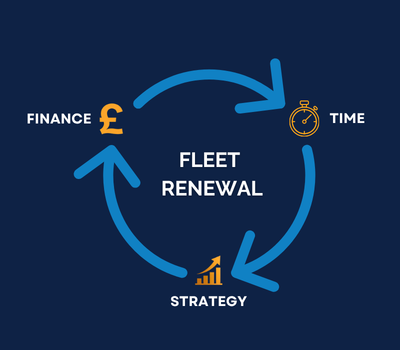
  • Plan for renewals well in advance to ensure lead times for vehicles (Minibuses often have longer lead times due to conversions)


Start with: Mileage + condition + term + flexibility and then choose the product structure


Funding Options at a Glance (School Context)


A quick view of how funding methods map to school priorities.


Key Points

Practical Guidance

  • Contract Hire: fixed monthly cost; best where mileage/condition is controlled

  • Heavier wear (fixtures, rural routes): consider ownership routes

  • Finance Lease: flexible; works well with predictable lifecycle planning

  • Cost certainty + controlled use: contract hire + maintenance

  • Cash: simplest ownership but ties up capital

  • Future adaptation likely: finance lease / flexible structures


  • Align with insurer and internal driver policy


We can compare total cost of operation across options and not just the monthly options.


If you want tailored advice, email leasing@automotivate.co.uk or call 01865 20 30 40. We will help with permit path clarity, vehicle specifications and the right funding structure. You can view our leasing offers here.


From our Director, Dominic Illbury. Last reviewed: 19th May 2026

Recent posts

Fuel Cards vs Expense Claims: What is Actually Better for your Fleet

19 May 2026

Fuel Cards vs Expense Claims: What is Actually Better for your Fleet

Commercial Vehicle Tax & 2026 Funding Guide UK

26 Mar 2026

Commercial Vehicle Tax & 2026 Funding Guide UK

Which is right for your fleet? Contract Hire, Finance Lease or Hire Purchase?

18 Mar 2026

Which is right for your fleet? Contract Hire, Finance Lease or Hire Purchase?

A Fleet Buyers Guide to which Commercial Vans have the Lowest Downtime

4 Mar 2026

A Fleet Buyers Guide to which Commercial Vans have the Lowest Downtime

You may be interested

Fuel Cards vs Expense Claims: What is Actually Better for your Fleet

From The Director

Fuel Cards vs Expense Claims: What is Actually Better for your Fleet

19 May 2026

Commercial Vehicle Tax & 2026 Funding Guide UK

From The Director

Commercial Vehicle Tax & 2026 Funding Guide UK

26 Mar 2026

Which is right for your fleet? Contract Hire, Finance Lease or Hire Purchase?

From The Director

Which is right for your fleet? Contract Hire, Finance Lease or Hire Purchase?

18 Mar 2026

bottom of page